RiseGuide Team
 FREE GUIDE with any plan: the First Impression FormulaClaim the offer
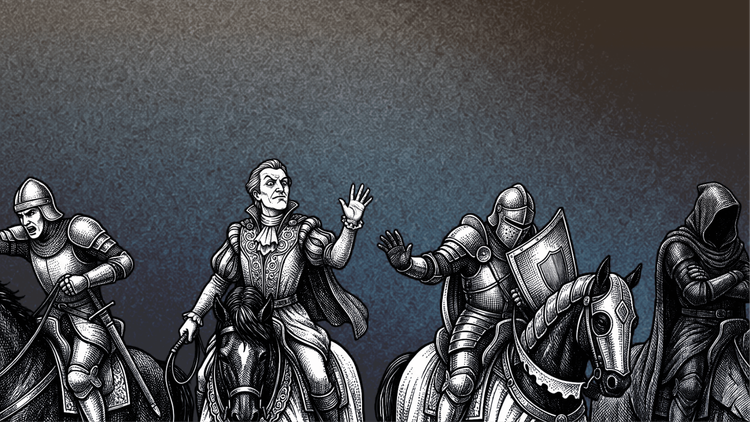
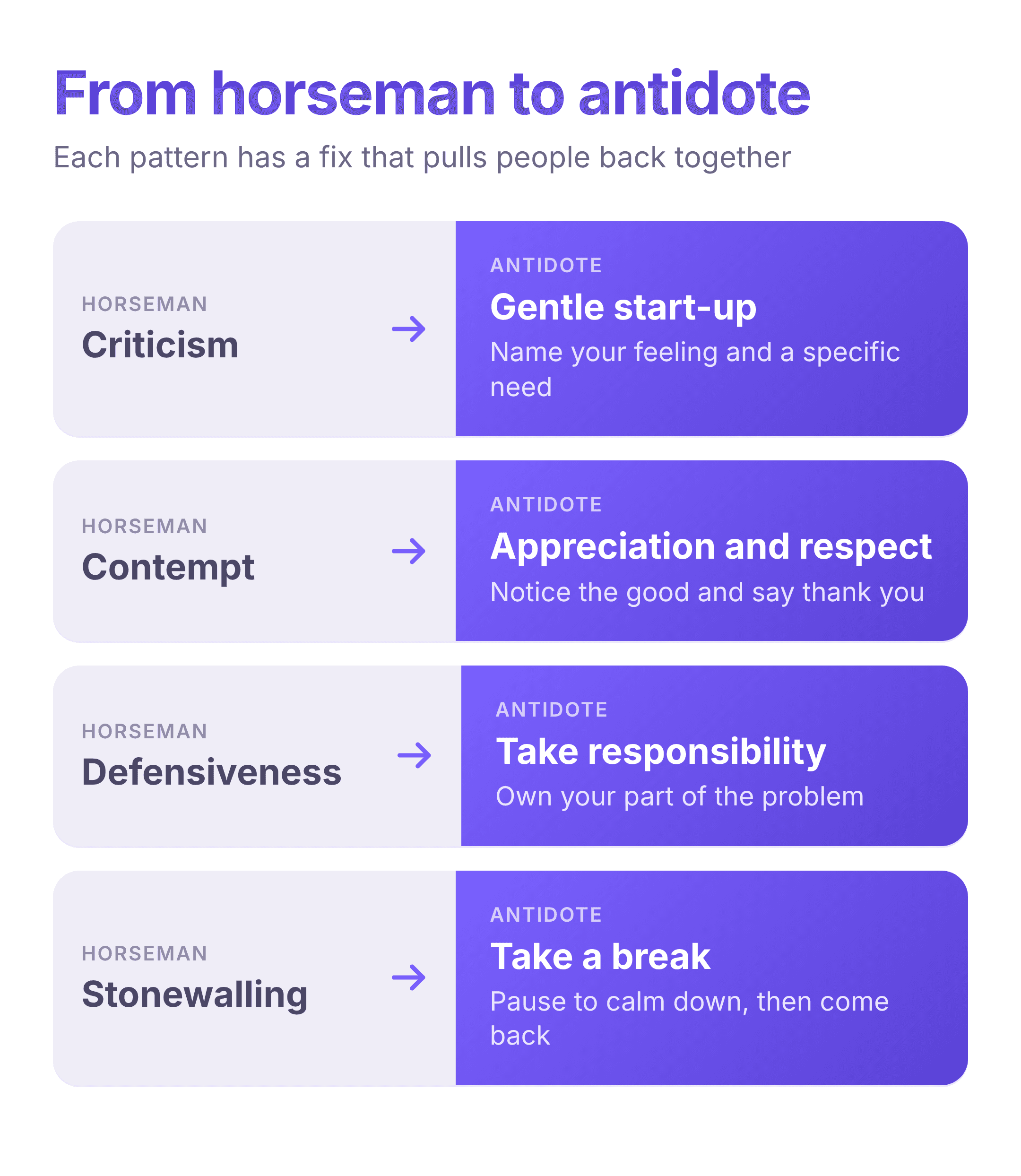
The four horsemen of communication are four patterns that break down a relationship, named by psychologist John Gottman: criticism (attacking the person instead of the problem), contempt (sarcasm, mockery, or disrespect), defensiveness (dodging responsibility and reversing blame), and stonewalling (shutting down and going silent). Each has an antidote. Replace criticism with a gentle start-up that names your own feeling and a specific need; replace contempt by building a habit of appreciation and respect; replace defensiveness by taking responsibility for your part; and replace stonewalling by taking a short break to calm down before you keep talking. Contempt is the most damaging of the four, so it is the one to catch first.
Every close relationship has conflict. What keeps a relationship healthy is the way people handle those arguments. Psychologist John Gottman spent decades watching couples talk in his research lab and found that a handful of communication patterns show up again and again when a relationship is in trouble. He called them the four horsemen of communication, a play on the four horsemen of the apocalypse, because together they tend to signal the end. Each pattern has a clear antidote, and because the same patterns show up at work and with family, learning to spot them helps in any relationship.
A quick note: this article explains a communication framework for everyday relationships. It isn't therapy or mental-health advice, and it isn't a substitute for talking with a licensed professional if you or your relationship needs real support.
The four horsemen are four communication habits that the Gottman Institute identified as warning signs in a relationship: criticism, contempt, defensiveness, and stonewalling. They often arrive in that order, one leading to the next, which is why a small disagreement can spiral. The Gottman four horsemen aren't about the occasional bad day. The concern is when they become the normal way two people talk to each other. Below is each horseman, what it sounds like, and the antidote Gottman pairs with it.
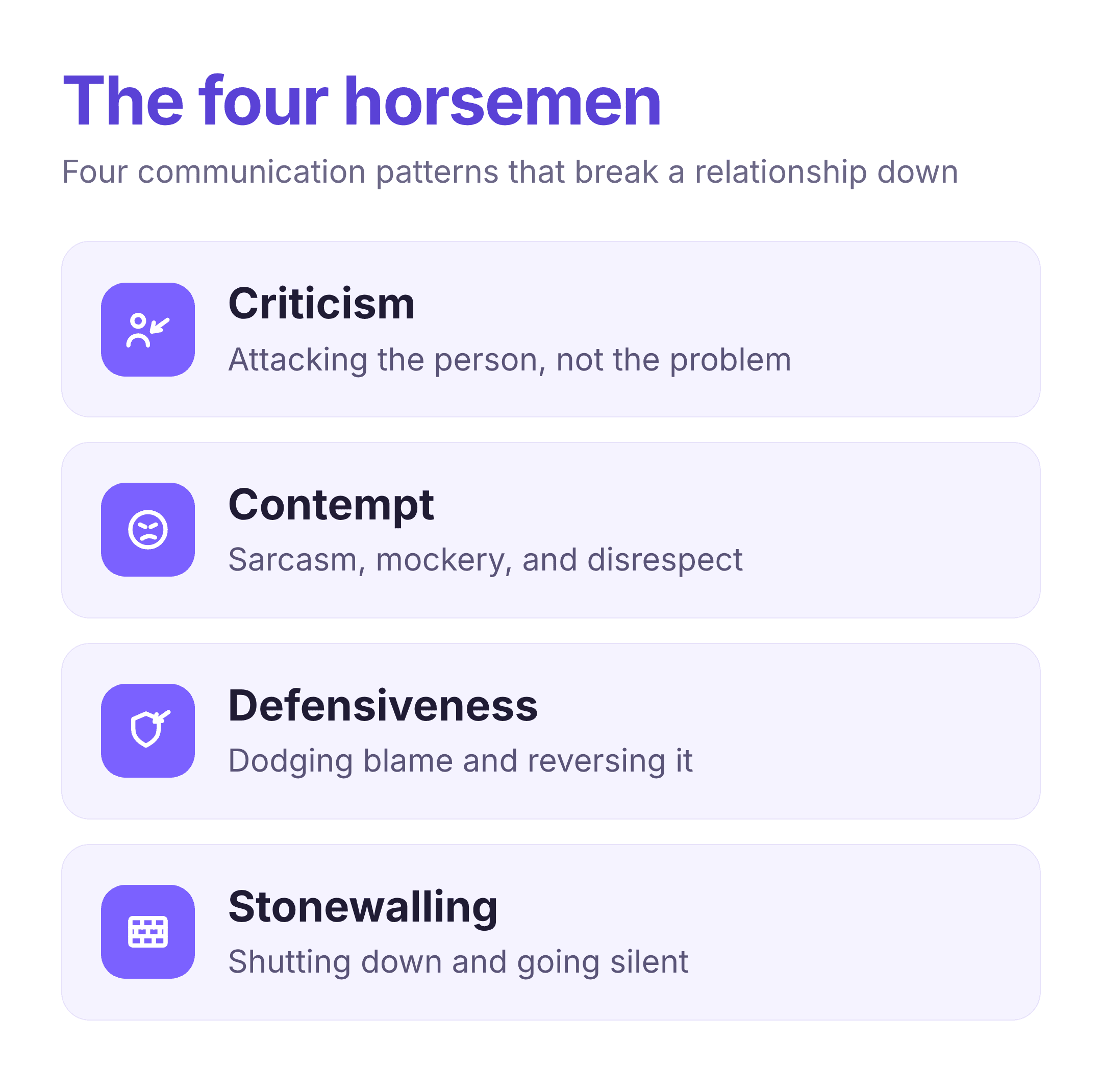
Criticism is different from a complaint. A complaint is about a specific action ("you didn't call when you were running late"). Criticism attacks the person behind the action ("you never think about anyone but yourself"). Words like "always" and "never" are a common tell. The problem is that criticism puts the other person on the defensive, so the real issue never gets solved, and over time it opens the door to the harsher horsemen.
The antidote is a gentle start-up. Instead of leading with blame, describe what you see, say how you feel, and name what you need. "I felt worried when I didn't hear from you. Next time, could you send a quick text?" states the same issue without putting the other person on trial. The shift from how people argue to what they need is the heart of good communication styles.
Contempt is the most serious of the four. It goes beyond criticism into disrespect: sarcasm, mockery, name-calling, eye-rolling, and talking down to someone from a place of feeling superior. Contempt in a relationship makes the other person feel worthless, and it is corrosive because it signals you have lost regard for them. In Gottman's research it stands out from the rest:
"Most importantly, contempt is the single greatest predictor of divorce. It must be eliminated."
The antidote is to build a culture of appreciation and respect. Contempt grows in relationships where the good is taken for granted, so the fix is steady and ongoing: notice what the other person does well, say thank you often, and remind yourself of what you value about them. A relationship with a strong habit of appreciation has far less room for contempt to take hold.
Defensiveness usually shows up as a response to criticism. Instead of hearing the concern, you defend yourself, make excuses, or flip it back ("well, you do the same thing"). It feels natural, but it tells the other person you won't take their worry seriously, so the conflict escalates. Defensiveness is a way of saying the problem is not mine.
The antidote is to take responsibility, even for a small part of the problem. You don't have to accept blame for everything, but finding the piece that is yours ("you're right, I forgot to tell you") lowers the temperature and makes the other person far more willing to meet you halfway. A lot of interpersonal conflict eases the moment one person stops defending and starts listening.
Stonewalling is when one person shuts down and withdraws: going silent, looking away, or physically leaving the conversation. It often comes from feeling overwhelmed, when someone is so flooded that they simply stop responding. From the outside it can look like not caring. Usually it's the opposite: the person feels overloaded and doesn't know what else to do.
The antidote is physiological self-soothing, which is a technical way of saying take a break. When you feel flooded, tell the other person you need to pause, step away for at least twenty minutes, and do something calming before you come back. A pause like this helps as long as you return to the conversation. Learning to stay in a hard conversation rather than flee it is exactly what Demetra Moore, a leadership and communication coach and one of our experts, writes about.
You don't need to catch all four at once. Start by noticing which horseman you reach for most under stress, since most people have a go-to. Then practice its antidote in low-stakes moments, not only in the middle of a fight, so it feels available when things get heated. The patterns run both ways, so it helps when both people learn the language and can name a horseman gently ("that felt a bit like criticism") instead of keeping score. When silence and distance have become the norm, the deeper issue is often a steady lack of communication that the antidotes can slowly reverse.
If putting these into practice is what you want to work on, RiseGuide's Communication Mastery journey turns ideas like these into short, practical lessons drawn from the insights of communication experts, so you can rehearse a calmer response before the next hard conversation.

The four horsemen are useful because they give a name to patterns most of us slip into without noticing. Criticism, contempt, defensiveness, and stonewalling each push people apart, and each has an antidote that pulls them back together. You won't get it right every time, and you don't need to. Catching one horseman in the moment and choosing its antidote instead is enough to change how a conversation goes.
They are four patterns John Gottman found that predict relationship breakdown: criticism (attacking the person), contempt (disrespect and sarcasm), defensiveness (dodging responsibility), and stonewalling (shutting down). They're sometimes called the four horsemen of the apocalypse because they tend to appear together as a relationship declines.
Contempt. The Gottman Institute calls it the single greatest predictor of divorce, because it combines criticism with disrespect and tells the other person you look down on them.
A gentle start-up for criticism, building appreciation and respect for contempt, taking responsibility for defensiveness, and taking a break to self-soothe for stonewalling.
No. Gottman studied romantic couples, but the same patterns show up between coworkers, friends, and family, and the antidotes work the same way in each.